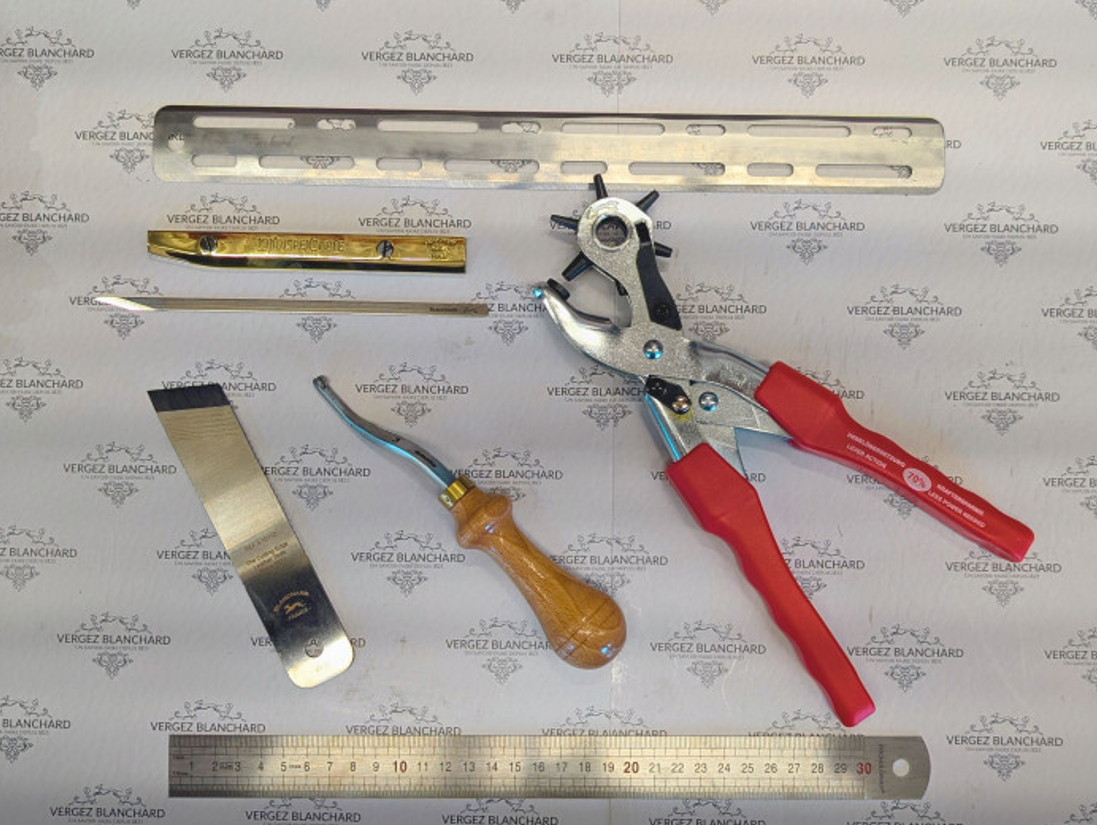
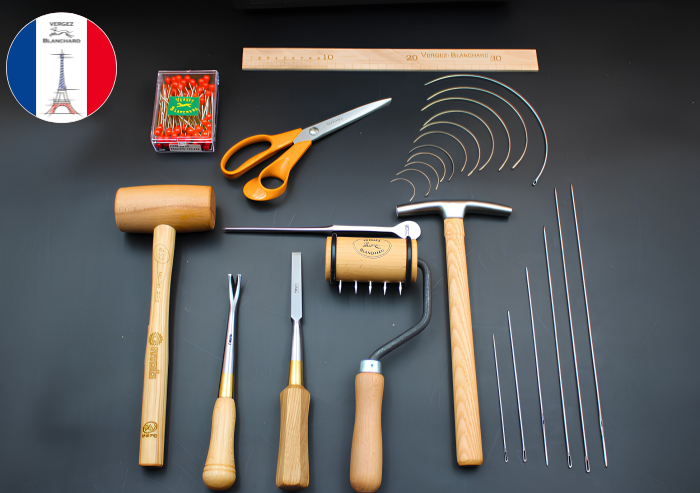
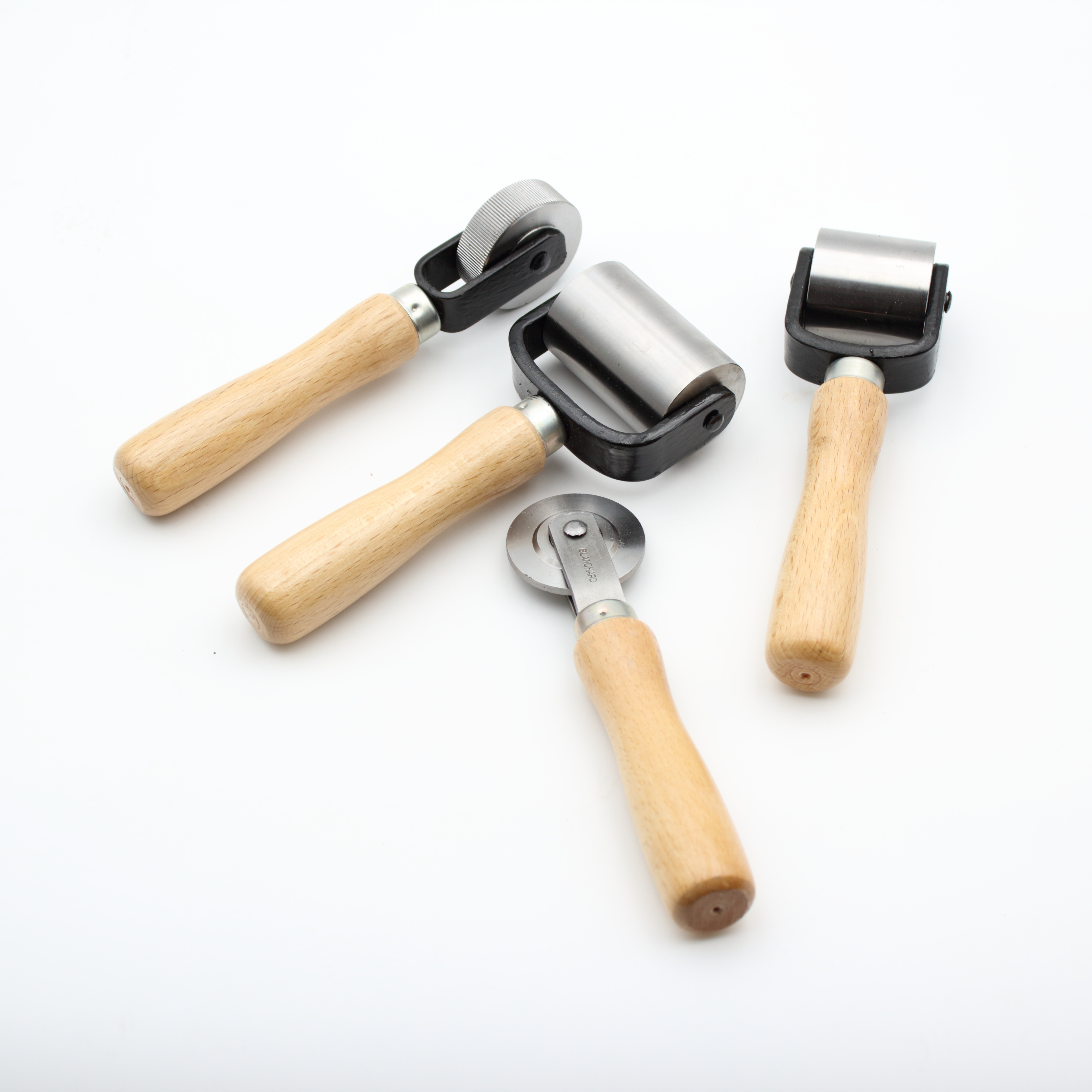
Founded in the 19th century by Louis René Blanchard, Vergez Blanchard continues to manufacture tools renowned for their exceptional quality for a wide range of traditional crafts. From its very beginnings to the present day, the company has remained committed to combining its rich heritage with a forward-looking spirit of innovation, preserving time-honoured craftsmanship while embracing the ideas and technologies of tomorrow.
The story of Vergez-Blanchard
Manufacturer of Tools for Harness Makers, Saddlers, Tanners, Shoemakers and Leatherworkers
The history of the Blanchard company officially began in 1823, the date appearing on the oldest surviving company records. At that time, it was a small Parisian cutlery workshop specializing in the manufacture of tools for the leather trades.
Over the years, this artisan workshop grew into an internationally renowned manufacturer, recognized for the exceptional quality, precision, and durability of its hand-crafted tools.
In 1828, Louis René Blanchard worked as a cutler at **37 Rue des Gravilliers** in Paris. Thanks to his expertise and craftsmanship, he built a loyal customer base and laid the foundations of a company that would continue to grow over the decades.
Driven by a desire to expand the business, Louis René Blanchard entered into a partnership with Victor-Joseph-Charles Mercier in 1842. The company was subsequently renamed **Mercier-Blanchard & Cie**, marking a significant milestone in its commercial development.
Two years later, in 1844, **Louis Hippolyte Simonin** took over the business. He obtained the right from Mercier to use the trademarks **"Mercier," "Mercier-Blanchard,"** or simply **"Blanchard"** on all or part of the company's production. This transition ensured the continuity of the company's well-established reputation while laying the groundwork for its future expansion.
Growth and recognition
As the business continued to grow, the workshops were relocated in 1849 to 24 Rue des Marais-Saint-Martin in Paris. A few years later, in 1856, the Simonin-Frézard partnership was dissolved. Louis Hippolyte Simonin continued the business independently and moved the workshops to 13 Rue de la Fontaine-au-Roi, in Paris's 11th arrondissement. This relocation marked a major turning point, providing larger facilities and enabling increased production.
In 1866, Simonin formed a new partnership with Stanislas Frézard, creating the company Simonin dit Blanchard & Cie. Ten years later, in 1876, following the dissolution of this partnership, the business was sold to Simonin's sons, Léon and Lucien Simonin, who continued the company's activities alongside Stanislas Frézard.
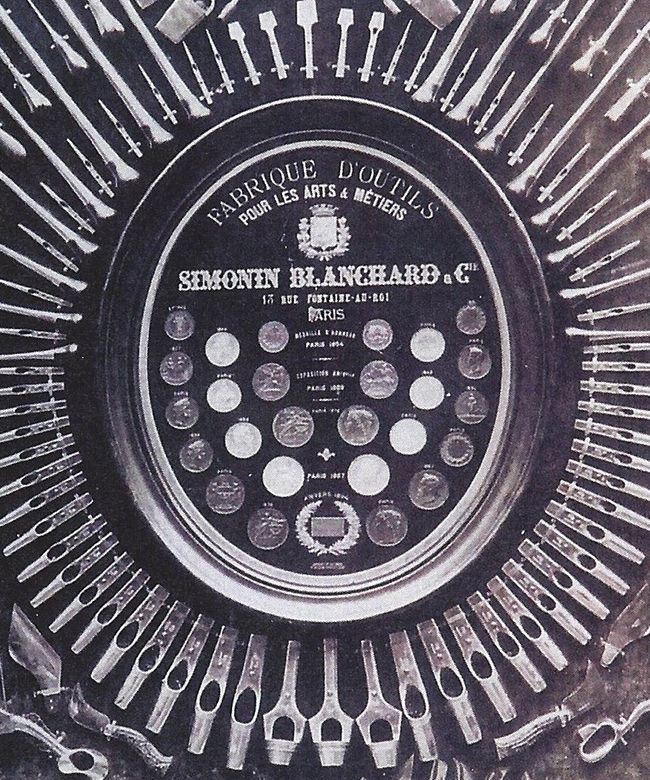
The outstanding quality of Blanchard's tools quickly earned recognition far beyond France's borders. The company received several prestigious awards, including Gold Medals at the Paris Universal Expositions of 1878 and 1889, honoring the excellence of its craftsmanship and the superior quality of its tools.
Relocation of the workshop to Normandy
This period of growth continued in 1898, when Adrien Soubeyran joined the company. A visionary and dynamic entrepreneur, he gradually took over the leadership of the business as the former partners retired or passed away.
The year 1900 marked another major achievement when the company was awarded the Grand Prix at the Paris Universal Exposition, one of the highest industrial honors of its time.
Recognizing the limitations of the Paris workshops, Adrien Soubeyran began relocating the manufacturing operations in 1901 to Romilly-sur-Andelle, in the Normandy region of France. The new site offered more space and access to reliable hydraulic power, ideally suited to the company's manufacturing needs. The commercial offices and shipping department, however, remained in Paris to maintain close ties with customers.
Expanding into new markets
Blanchard continued its expansion in 1910 with the acquisition of the Vergez brand, a small tool manufacturer also based in Paris's 11th arrondissement. This acquisition enabled the company to further broaden its range of tools for professional craftsmen.
The company's product range continued to expand during the First World War, as manufacturing evolved to meet new industrial demands.
While the traditional leather trades remained at the heart of the business, new markets emerged. Blanchard diversified its production by developing tools for the automotive industry, rubber processing, tyre manufacturing, forestry, slate roofing, and a wide variety of custom-made tools manufactured to customer specifications to meet the specific requirements of industrial clients.
The company's headquarters remained on Rue de la Fontaine-au-Roi until the mid-1950s, before being relocated to 30 bis Rue Moret, still in Paris's 11th arrondissement.
The company was then marked by the loss of several key figures. Adrien Soubeyran passed away on 24 February 1929 at the age of 72, followed by Marcel Chavanne, who died on 10 January 1932 at the age of just 43.
The years 1940 to 1948 were particularly challenging. The Second World War, the closure of international borders, and the post-war reconstruction profoundly disrupted international trade. Unable to import French-made tools, many foreign manufacturers began producing their own alternatives to replace the Blanchard tools they could no longer obtain. Despite these difficulties, the company successfully maintained its operations and preserved its unique craftsmanship.
A pioneer in commercial communication, the company also supplied its retailers with large illustrated wall displays showcasing its entire product range. Although Blanchard tools were sold through a network of specialized dealers, this innovative form of advertising played a significant role in strengthening the brand's reputation and international recognition.
From hydropower to electricity
The company continued to modernize its manufacturing facilities. In 1970, its machinery was progressively converted to electric power. Until then, a significant part of the production process had still relied on the hydraulic power available at the Romilly-sur-Andelle site.
This historic energy source was finally phased out in 1986, bringing to an end more than eight decades of reliance on hydropower and marking a new chapter in the company's industrial modernization.
In 2020, Mr. Gervais took over the Blanchard company
"Today, we look to the future with the ambition of growing the brand, passing on our expertise, and continuing to write the story of Vergez-Blanchard alongside the craftsmen and artisans who keep traditional trades alive."