Manufacturer of Hand-Forged Tools

Discover the Vergez-Blanchard edge tool workshop and the manufacturing process behind our hand-forged tools. A French manufacturer preserving its traditional craftsmanship since 1823.

Hand-Forged Tools

French craftsmanship since 1823

For over 200 years, Vergez-Blanchard has been preserving a unique expertise in the manufacture of professional hand-forged tools. Based in Normandy, France, we design and produce tools for leatherworkers, leather goods professionals, saddlers, upholsterers and many other craftspeople.

Each tool is the result of a balance between tradition, high standards and innovation. Our goal is simple: to offer precise, durable tools capable of supporting professionals throughout their careers.

The quality of a tool does not depend solely on its design. It comes from a succession of carefully executed manufacturing steps carried out with precision by our skilled craftsmen.

From steel selection to final quality control, every operation is performed with the utmost care to ensure consistent performance.

Our expertise across the entire manufacturing process also allows us to develop custom tools that meet the most demanding requirements.

1. Design

Everything begins with a design phase.

Depending on the model, our tools are designed from historical drawings preserved over several generations or developed specifically to meet a precise need.

Dimensions, ergonomics, cutting edge geometry and tool balance are carefully studied to achieve a result perfectly suited to its intended use.

Forging is at the heart of our craft.

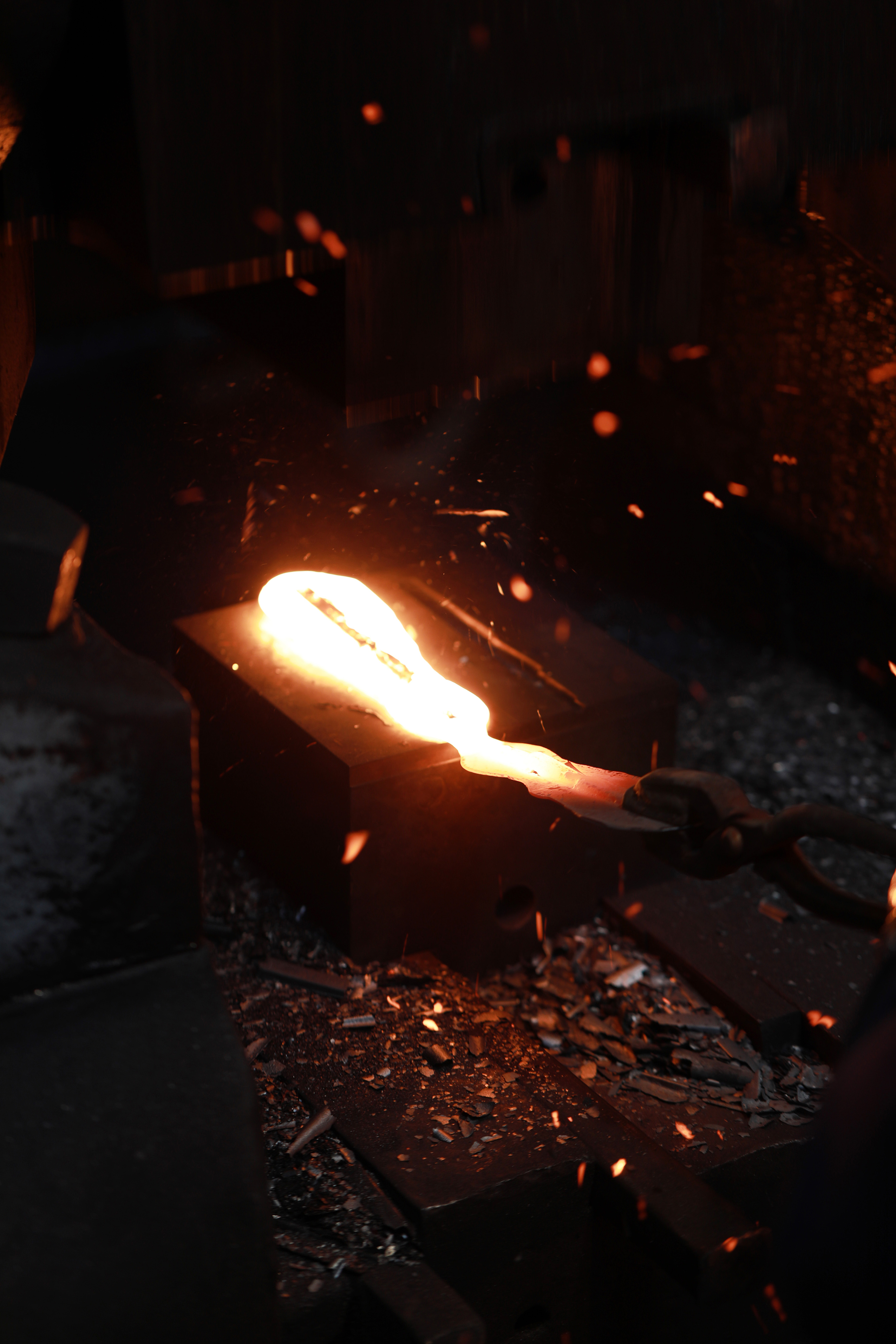
The steel is heated to a high temperature before being shaped under our historic power hammer or with our modern forging equipment.

This step gives the metal a particularly strong structure while giving each tool its final shape.

The blacksmith’s expertise remains essential: each piece is carefully shaped with precision to ensure strength and durability.

Once forged, the parts are carefully worked by our craftsmen to remove any burrs.

Thanks to the manual expertise of our teams, each tool is precisely adjusted.

Dimensions, profiles and assemblies are checked to ensure perfect performance.

Heat treatment is an essential step.

It allows us to achieve the ideal balance between hardness, wear resistance and flexibility.

Each tool family has its own specific process to meet the demands of its intended use.

This expertise is what guarantees the cutting quality and lifespan of our tools.

In forging and metallurgy, tempering is a heat treatment carried out after quenching. It consists of gently reheating the steel to a moderate temperature in order to reduce brittleness and increase the strength and toughness of the part.

Each tool is then polished to achieve an impeccable finish.

Polishing not only enhances the appearance of the tool but also improves user comfort, reduces friction and makes maintenance easier.

Our craftsmen pay particular attention to working surfaces in order to deliver a level of finish recognised by professionals, especially in the leather goods industry.

Sharpening is carried out with great precision.

The cutting angle is adapted to each type of tool in order to achieve optimal efficiency from the very first use.

Each cutting edge is inspected before shipment.

This step requires experience, precision and a perfect understanding of the different applications.

We also manufacture most of our tool handles using wood sourced from a local forest with PEFC certification.

Controlling the production of our handles allows us to carefully work on ergonomics, finishes and long-lasting user comfort.

Our tools are then assembled and inspected before being shipped.

Cutting tests are carried out to ensure their performance.

100% Controlled Manufacturing in Our Workshop

The Main Manufacturing Steps

Our expertise goes beyond tool manufacturing. We also design and produce our own forging dies, as well as all the tooling required for their production.

Watch the video

The Manufacturing of a Riveting Hammer

Stamping is the first shaping step in the production of harness makers’ riveting hammers at the Vergez-Blanchard workshop. The steel bar is heated in the forge, then shaped under the power hammer using forging dies.

After forging and stamping, the harness maker’s riveting hammer is ground and then polished.

Finally, the handle is fitted onto the riveting hammer.

French Excellence

Bespoke Manufacturing

Each trade, each craftsperson and each workshop has its own specific requirements. That is why Vergez-Blanchard puts its expertise at the service of your projects by offering the design and manufacture of custom-made tools.

Thanks to our complete mastery of the manufacturing process — from designing forging dies and producing tooling, to forging, machining, heat treatment and finishing — we are able to adapt an existing tool or develop a fully customised model.

Have a specific project?